

Almost five years after the FIFA World Cup in Russia, which held from June 14 to July 15, 2018, many men and women from Africa are still trapped in the eastern European country as illegal migrants, often subjected to subhuman treatment, used as menial workers, domestic labour or sex slaves.
Because of the liberal, simplified, visa-free entry methods, such as fan identifications with a World Cup ticket, thousands of people, including Nigerians, took the chance to go to Russia, not really for the football tournament, but to seek greener pastures and economic asylum. Also, human trafficking rings took advantage of the World Cup to fish for migrants eager to move to Europe.
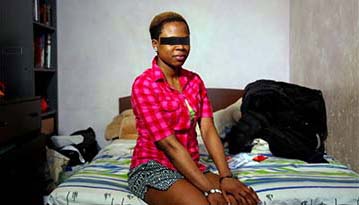
For instance, Mercy (not teal name), a single mother from Edo State, saw Russia 2018 as an opportunity to get a job and begin a better life abroad. She used a fan ID to travel to Moscow.
She hoped to get a decent job, although she had no work permit, residency or long-stay visa. Instead, she found herself forced to work as a prostitute.
On getting to Moscow through some contacts, rather than finding a job, she was locked up in a flat and made to service several men daily.
Along with at least 10 other Nigerian women, she had to do the bidding of the trafficking gang, the pimps and the Nigerian ‘madam’ who was in charge of the brothel.
Mercy said she had hoped to work as a shop assistant to provide for her two-year-old daughter and younger siblings back in Nigeria. In Russia, her passport was seized and she lost her freedom, as the madam told her she owed the ‘organisation’ $50,000, shich she had to pay off working as a call girl.
Mercy told newsmen after being freed by anti-slavery activists that she was “without choice.”
She told her story to an English-speaking client who got anti-slavery activists involved.
Two Nigerians were later arrested and charged with human trafficking after striking a deal to sell Mercy for 2 million rubles (around $30,000) to a police officer posing as a client, according to her lawyer. The case is still under investigation.
The victim has returned to Nigeria and reunited with her family.
Mercy’s case was one of many others involving young Nigerian women, aged 18 to 22, who flew to Russia on fan IDs, with cartels enticing them through nebulous job offers and false hopes of a cushy life in Europe.
One of the victims from Nigeria told journalists after they were freed by anti-slavery activists that they were dehumanized and endured savage treatment.
“They don’t give you food for days, they slap you, they beat you, they spit in your face…It’s like a cage,” the 21-year-old woman said, though she declined to be named.
A Nigerian woman was killed a year after the World Cup by a man who refused to pay for sex, police said. The Nigerian embassy later identified her as 22-year-old Alifat Momoh who had come to Russia from Nigeria with a fan ID.
Russian police say 1,863 Nigerians who entered the country with fan IDs had not left by January 1, 2019, the date when the IDs expired.
Some Moscow NGOs have estimated that more than 2,000 Nigerian women were brought in on fan IDs.
Neither Russian police nor the Nigerian embassy in Moscow replied to requests for a comment from newsmen. A Nigerian foreign ministry spokesman also did not respond to text messages and phone calls requesting a comment.
“Many are still in slavery,” said an activist working with the NGOs who said he had helped around 40 women return to Nigeria.
“Fan ID is a very good thing, but in the hands of the human traffickers it’s just an instrument,” he said, calling for more cooperation between the authorities and anti-trafficking NGOs during major sporting events, including the 2022 Qatar World Cup.
Anti-slavery group Alternativa said its helpline had fielded calls from Nigerian women held in St. Petersburg and other World Cup host cities.