

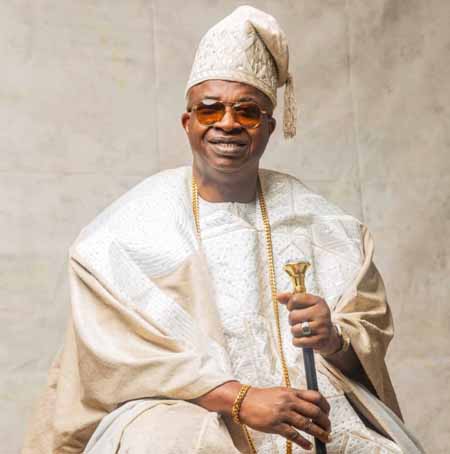
When the topic is how to conquer female infertility and put a smile on the faces of women desiring fruits of the womb, Nordica Fertility Clinic is open sesame and its founder, Dr Abayomi Ajayi, a hero. He turns 60 today, March 16. In this interview with thelaurel.com.ng, he talks about his passion as a gynaecologist and obstetrician, his lifestyle, growing up and the dynamics of working with his spouse. Excerpts.

How has life been at 60?
Very good. We thank God for His grace and mercy.
Any regret so far?
I don’t know. Honestly, I don’t know what I would have done differently. I love my life.
How has the journey been as a fertility doctor?
No regrets either. The most important thing to me is the result. You can see all the babies’ pictures around. When I work sometimes and I remember to look at those pictures―some of them have stories that I remember―I just smile. I think we have been able to add to many families to help them complete their family. And that for me is not something that you can quantify in any way. We have been able to do some new things too. Like removing fibroid without surgery. We are also starting new things in the country that we think would benefit the populace.
As a fertility doctor, are there cases you deem so bad case that you couldn’t handle?
What we need to get right is, people need to make the right decisions. There is always a husband for everybody and there’s a wife for everybody. There’s also a solution for every problem; the thing is, is that what you want? Sometimes, people come to the fertility clinic they think they know what they want or they don’t even know what they want, they just want a baby. So, there are different categories. Some people just want a baby and they don’t mind how they get the baby even through other means that are not IVF. To answer your question directly, there’s almost no case that has no solution but whether the solutions are acceptable to the couple is a different thing. Even to a woman that is sick and her health does not support pregnancy, there’s surrogacy. There’s always a solution to almost everything. If the couple says they don’t want your solution there’s nothing you can do about it.
You lost your parents early in life, so who brought you up?
My uncle. I had a very loving and kind uncle. God bless his soul. He was wealthy and very good. Sometimes, I have to remind myself that he’s not my father. His wife was my father’s younger sister. Growing up for me was good, I enjoyed myself. I wasn’t a stubborn child but I was headstrong. If I believe in anything, you need the Nigerian Army to change my mind. I love books and the best thing I do is read. If you have above-average intelligence also, you could get away with so many things. I had a good childhood. My parents died when I was very young but I was very lucky all through my life. I think God has just been gracious to me. And then, I have learnt to live with whatever I have. I’m contented. Anything I can’t afford, I don’t miss it. That was how I grew up and remain to date.

Why did you ask your wife to join you at Nordica?
We have been working together for almost 15 years now. I think, first of all, my weakness is her strength and her weakness is my strength. I’m very impatient. She’s very patient. When I realized that, I thought that she should come over to Nordica. In the past years, I was very impatient. People don’t just understand me. Some people take it for be- ing wicked, all kinds of interpretations. If you know me very well, that is not true. I needed someone who can interpret to them who I’m really. She’s more approachable. Once I have something in my head until it’s done, don’t stand in my way. She was like my interpreter. That was how we first started and she was able to do that properly. After a while, we got used to working with each other. When I want things done and she’s the one standing on my way ‘wahala dey’. Now, one is getting more matured.
What’s your biggest challenge as a doctor?
For me, my concern is how to make people understand what we are doing. The man on the street; how can you break it down so that he can understand what you are doing? The main difference between advanced countries and ours from the patient’s point of view is that they understand the basic things about reproduction, but here we don’t. We come sometimes with unrealistic expectations. We don’t understand the technology even though we’re educated. Lately, a lady was asked why she left Nigeria, and she said Nigeria is a country where they don’t teach sex education. I thought that was extreme but it’s true. Even up till now, what do people think about sex education? What I am trying to say is that we don’t read, we are not hungry for information and then again information is not even disseminated in a way that everybody can understand. That’s why my best friends are journalists. The media is very strong. TV is a very strong instrument if well used, but if not well used, it can also be dangerous. There’s not enough attention to health. No matter how wealthy you are, if you’re not healthy you are gone. If a patient comes to you and you are explaining something, they tell you: “Doctor, I trust your judgment”. I don’t want you to trust me; I want you to know what I’m talking about, what I’m saying. Don’t trust me, because it’s mental laziness when you say you trust somebody when you should understand. When a Nigerian has a car worth $50million, he takes care of the car, but when a doctor tells him to stay at home because of his health, he tells the doctor he must go out because of a contract. Our health is so important but we sometimes entrust them to quacks. You go to a doctor and you don’t know if he’s a gynaecologist and you say you need IVF. It’s your responsibility to know the doctor treating you. What’s his qualification? Is he qualified to do what he’s doing? I tell people, you won’t take your BMW car to a Toyota mechanic; that means your car is even more valuable than your health. I think we can do better in this country.
How do you relax when you are not thinking of Nordica?
I thought overtime that Nordica would get less and less of my time. I don’t think so because I’m even getting more absorbed into it.
Maybe the only time I probably don’t think about Nordica is when I go for Christmas break. Sometimes, it’s difficult. It’s like you are married to your work. Probably Nordica is my first wife, now my wife is the second wife. It’s interesting when you make people smile carrying their babies. It just consumes you without you knowing it. My wife prefers me to be unfaithful to her with my work (laughs).