


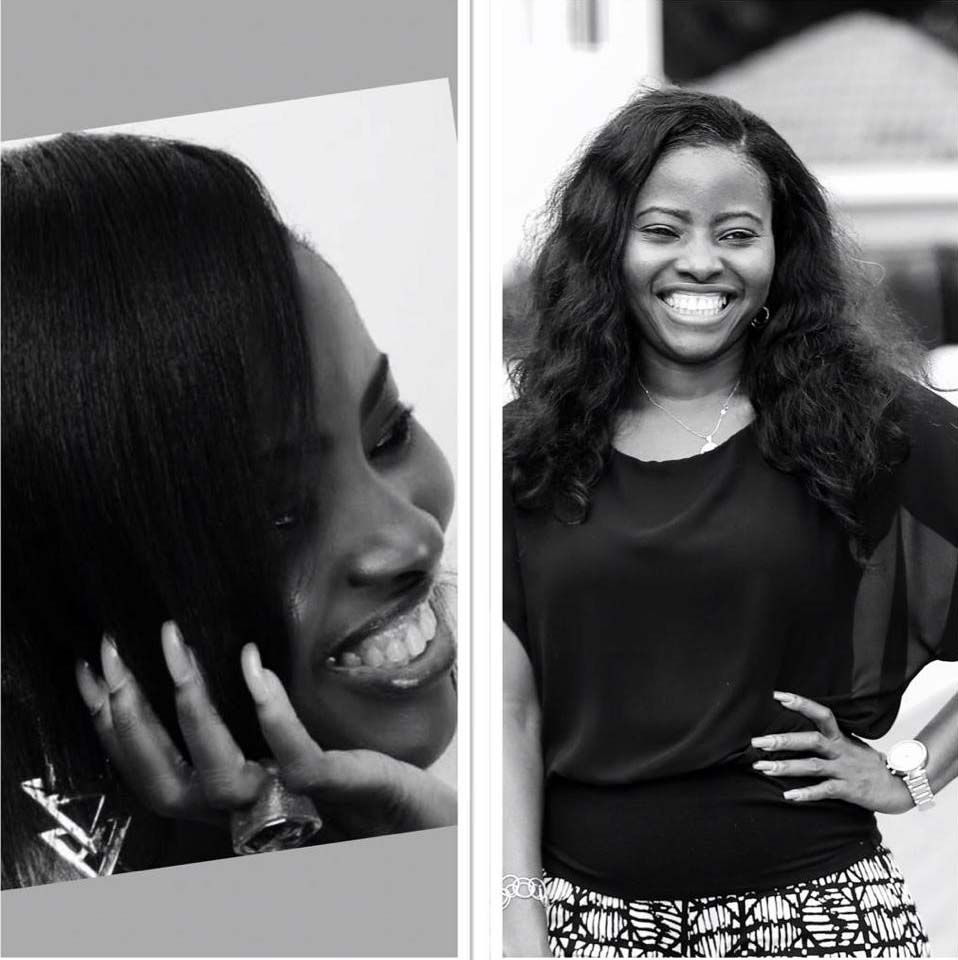
Ilusemiti Temitope was born in the city of Ibadan in Oyo State situated in the south-western Part of Nigeria. She attended Ladoke Akintola University of technology, Ogbomosho to study Chemical Engineering graduating with a Bachelor of Technology in Chemical Engineering in 2001. Talking with The Laurel, this amiable Leading Well Completions Engineer, talked about her profession and memories growing up.
What informed your decision to study engineering and the field you choose?
Back in secondary school, I was an excellent science student, and was particularly quite passionate about mathematics and physics. I spent a great deal of my time solving math questions and assisting my classmates – an early indication of my ongoing passion for training and mentoring other engineers in the industry. With engineering, I saw that I would be able to actually take my love of physics and mathematics and apply them through real-world applications of technology and technique – essentially taking my abstract passions and manifesting them in the real world. From then on, I had an insatiable interest in engineering.
During my final year in my secondary school, I was already seeking opportunities which would allow me to broaden by Engineering knowledge, so when the school organized a leadership training seminar featuring an expert speaker from one of the Leading Oilfield Servicing Company , I was certainly keenly interested. Both I and the rest of the student body were already, of course, quite familiar with this company. In my home country, in particular – the largest producer of oil and gas on the continent – Schlumberger is a major employer and innovator in the field, so I knew it would be one avenue to pursue even before seeing this speaker. But this engineer spoke so passionately about his job as an engineer and his experience working with this company, that it immediately shot up to the top of my list of possibilities. I knew, however, that in order to work with such a reputable and innovative company like this, I needed to study and excel in engineering.
Paint a picture of your career and what has been the experience so far?
My career with Schlumberger started at the company’s Africa hub in Port Harcourt in 2007, after a highly competitive recruiting process. I was hired as a Completions Field Engineer, which involved virtually every aspect of planning, preparation, and execution of complex well completion operations – involving everything from sand control to casing to cementing – across a wide variety of conditions and onshore (land. Swamps) and offshore (Drill ships, Jack-ups) rigs.
From the start, I took the initiative to get as much hands-on experience as possible – stripping down complex, high-tech completions equipment; analyzing said equipment for any problems and, where applicable, identifying areas in which it could be improved and modified dependent upon the environment and circumstances in which it was to be employed; redressing any of those issues; and re-assembling equipment in a fit-for-purpose configuration to be sent for deployment – typically in difficult and dangerous offshore drilling environments. I also performed technical inspections of all newly received equipment from the manufacturing plants to ensure that , as delivered, it met the required specifications in terms of Outer Diameter , Internal Diameters, and thread connection – among many other technical requirements – and recorded and mitigated, wherever possible, any non-conformances observed in the system.
As part of my career path, I grew from a Junior field engineer to a Field Engineer and at this point you become a supervisor after you have “Broken out”. The Breaking out process involves being assigned a Job and as your breakout Job you take full ownership of the Job from Job Preparation Meeting up till the Job Closure Process. One of the incidents that comes to my memory so vividly was when I had to use the public address system to communicate on the rig site and you could imagine hearing a feminine voice in a Male dominated environment, it felt so good I must say. The Company man and the entire rig crew were quite supportive as they gave all the necessary support and the operation was performed seamlessly.
From there I went through the Career Path to become a General Field Engineer. This was another Milestone in my career, the requirement was for an engineer to develop a project that will create an impact to the field population and the organization as a whole. To put my original scientific and business contribution into practice, I created and implemented the original training module “Fundamentals of Well Completions.
In fact, the field training program I developed for my GFE project was so successful that, in 2011, I was transferred to the Company’s Middle East Learning center in the UAE as the Completion Instructor. As Completions Instructor, I designed, prepared, delivered, and judged the effectiveness of training & development programs to ensure that dozens of engineers and technicians – hailing from as many as 140 different countries and with a wide variety of backgrounds and experience – had achieved the competency in a wide variety of complex and sometimes difficult-to-operate high-tech completions equipment. I set the passing criteria for students involved in both theoretical and practical sessions, judging their progress and grading them accordingly. I also created and implemented continuous improvement initiatives which were adopted throughout the training center, initiatives which both streamlined the entire training process and increased the skill and knowledge of the engineers passing through the system.

It should be noted that the Field Engineers and other specialists that I was training in the Middle East Training Center were already considered elite, learned experts in the field. These experts possessed a diverse range of engineering qualifications and engineering education equivalent to at least a master’s degree. Even given that kind of elite pedigree, the training I spearheaded proved critical to their continued effectiveness in the field.
In 2014, my career took me to a Southern African nation, Angola where I served as Completion Field Services Manager for most all of the company’s Sub-Saharan Operations
While I was in this location, I was involved in the deployment of several new and cutting-edge technologies in the region. These technologies include Open Hole Gravel Pack (OHGP), Standalone Screens (SAS), Cased hole Gravel pack (CHGP), chemical injection valves, and Deep-Set Safety valves
Beginning at the conceptual stage, I took control of the project from the design stage through the ultimate successful completion of the well. I designed the completion program well on paper and presented a detailed explanation to the stakeholders to ensure that all parties involved were fully informed and on board with the CHGP’s design and implementation of the, which was very critical to the success of the deployment.
This planning involved many reviews of the project parameters, constant monitoring of the conditions at the site, and communication with the client and the Engineering Team to get to a point where we were all comfortable to go ahead with the execution.
The client recognized my remarkable achievement with a commendation message, crediting my planning and direction of the team in achieving this.
In 2016, I was transferred to Accra Ghana as the Project Manager providing Technical Support to one of the Major Italian Company. I developed the basis of design for the completion, including the creation of complex completion design schematics and tool configurations for these wells which were tailored both to suit the complexities of the harsh and difficult well environment and to greatly reduce costs.
As part of my effort for the project, I developed the contingency plan for cutting the packer in case it set prematurely while running in hole due to certain well conditions. This involves coordinating the SIT for the Mechanical Cutter which involved the interface between our Wireline team, the Mechanical Cutter Provider , and the Completions Team with the involvement of Client. This ensured the space out to the Packer Mandrel cut target is done correctly with a SIT including all locators to the profile above the Packer to ensure enough clearance prior to RIH. This will help to save the project some money in Millions of dollars which could have been cost of having the rig on standby, cutting the tubing or possible sidetrack in the event of a stucked Packer

What memories of your school stand you out?
The most striking moment of my school days was in my University day. As of the time I got admission into my university (1995) we happened to be the 5th set of this college and this came with limited facilities as this was an upcoming university. The study was intense and the students – myself included – were extremely motivated. You had to arrive hours before the start of lectures just to secure a seat – not necessarily a good one, because of the intense competition you could be sure that several others had already been there several hours, seemingly regardless of when you left. The lecture hall, known by the students as the “poultry shed”, was a bare hall with a roof to cover. I spent many on hour on the “under G” road getting to class. This road was the main connection between the school and where most student hostels and other accommodations were situated, and the students would begin competing for a limited number of taxis, so we were often left with no option other than a 10 km. walk to school under the hot sun just so to make it to lecture.
Those experiences were not only important in terms of what I learned at Ladoke Akintola, but the intense competition and conditions made me stronger and prepared me for the successful future in worldwide oilfield engineering and management I have enjoyed over nearly two decades since.