

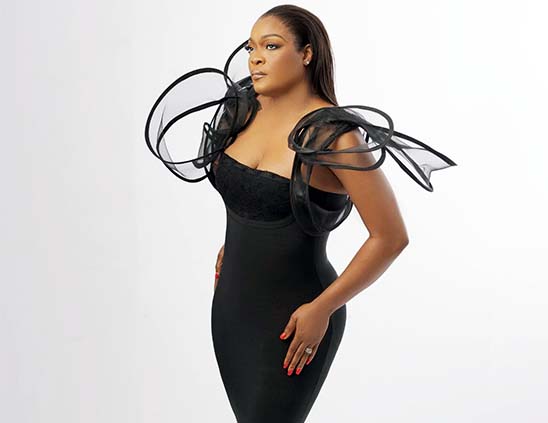
Patricia Onumonu, founder and creative head of Trish O Couture, started out as a runway model. Her label is synonymous with femininity, luxury and timeless style.
She spoke with theLaurel.com.ng recently to document the journey of her career as her fashion house marks its 18th anniversary. She went down memory lane about life as a model, designer and more, especially lessons life has taught her as a person.
Congratulations on 18 years of Trish O Couture! How did your journey into fashion begin, and what inspired you to start your label?
Thank you so much. My love for fashion began quite early. I grew up around my mother, who was very crafty and loved working with fabrics. So, I picked up beading and hand-sewing as a child. Later, my experience as a model and in beauty pageants exposed me to the creative process behind fashion. That was when I knew I wanted to tell stories about women through clothes — that passion eventually became Trish O Couture.
You were a top model during your university days. Could you tell us your experience back then?
It was a good experience, we were just happy being on the runway. Money was secondary to us but the passion to carry the clothes with confidence and dignity was what we were more particular about as we strutted that runway.
I modeled for Zizi Cardow, Dakova, Monami, Frank Osodi, Odeva and others, just to mention a few.
You originally studied and worked in a different field before venturing fully into fashion. How did that shape your approach to design and business?
Yes, I studied philosophy at the University of Lagos. It might sound unrelated, but it shaped my analytical thinking and taught me discipline. It helped me to build structure into my creativity and balance the artistic and business sides of fashion.
What’s your creative instinct like?
From what I’m seeing, Nigerians are too creative, it’s just that they don’t have the resources and the equipment to go as far as countries like China and Turkey. Nigeria has the potential to go farther than China and Turkey but what is killing the fashion industry is lack of electricity and manpower. Nigeria is even doing better than American now. In the bridals, Nigerians put a whole lot into the creative process. People in the US buy these outfits and bring them down to Nigeria for embellishment. I bought my wedding gown from one of the big bridal shops in the US but I took it to Elizabeth, she’s late now, for her to adjust it and put some embellishments. I believe, in 10 years’ time, people won’t believe what will be coming from Nigerian designers.
You’ve showcased internationally and dressed women around the world. Which milestones stand out most?
Every milestone is special — from our flagship opening to international showcases and seeing global celebrities in my designs. But the most fulfilling moments are when women tell me they feel powerful in my pieces. That’s priceless.
What has been the strongest force behind your success story?
God first. Secondly, my husband has been my backbone and support system, assisting me. The truth about it is, without him, there won’t be any Trish O. He has supported me from day one and here I am today.
Your personal style always exudes confidence and elegance. How would you describe it?
Feminine, structured, and timeless. I love silhouettes that celebrate the body but remain classy. On the red carpet, I go bold; off it, I keep things chic and simple but classy.
What does your lifestyle look like outside the atelier?
It’s a mix of business and calm. I spend a lot of time with my family and carve out moments to rest, read, or reflect. Fashion is demanding, so, balance is very important.
What lessons have you learnt about life?
Never underestimate anyone. My mother-in-law would always say “uwa na tughari.” A lot of people have really underestimated designers. In Nigeria, people think you have to be on a certain level before they recognize you. In Nigeria, they want to relate with the ones that have already made it. But I give it to Olori Aderonke Ademiluyi- Ogunwusi, who created platforms for young designers to showcase their creative abilities. I attended her show, Africa Fashion Week London, 14 years ago. She believes in me and she’s one person that believes that you don’t have to be made or belong to a cliqueto get recognized. I thank God for where I am today.
When you’re not designing, how do you unwind?
I love quiet holidays, spending time with family, or exploring places rich in culture and design. I find rest and inspiration in equal measure.
As you celebrate 18 years, what’s next for Trish O Couture?
We’re looking at expanding globally, collaborating with more artisans and creating signature wardrobe classics that define African luxury. My dream is for Trish O Couture to be a legacy brand that outlives me.
What advice would you give emerging African designers hoping to build sustainable brands?
Be patient, consistent and authentic. Learn every aspect of your craft and your business. Never compromise on quality — it’s what builds your reputation.
Family often plays a role in a designer’s success. How has yours supported you?
My family is my backbone. My mother influenced my early interest in fashion, and my family’s encouragement has been my strength throughout this journey. They’ve stood by me through every challenge.
The theme of your 18th-anniversary celebration, Classics Across All Seasons, is intriguing. What does it represent?
It reflects the essence of Trish O Couture — timelessness. I believe true style transcends trends and seasons. The theme celebrates our journey and commitment to creating pieces that never go out of fashion.
After nearly two decades, how do you stay inspired?
Travel inspires me a lot, as do fabrics, architecture and even conversations. I love exploring new techniques and reimagining traditional craftsmanship. Inspiration is everywhere, if you stay curious.
Do you have favourite fashion cities that inspire your creativity?
Definitely, Lagos, for its energy, Paris, for elegance, and Milan, for craftsmanship. Each city feeds a different part of my creative soul.
What’s your favorite food?
Lobsters. Seafood platter.
What are the challenges in your field?
The workers tend to go the other way round.