
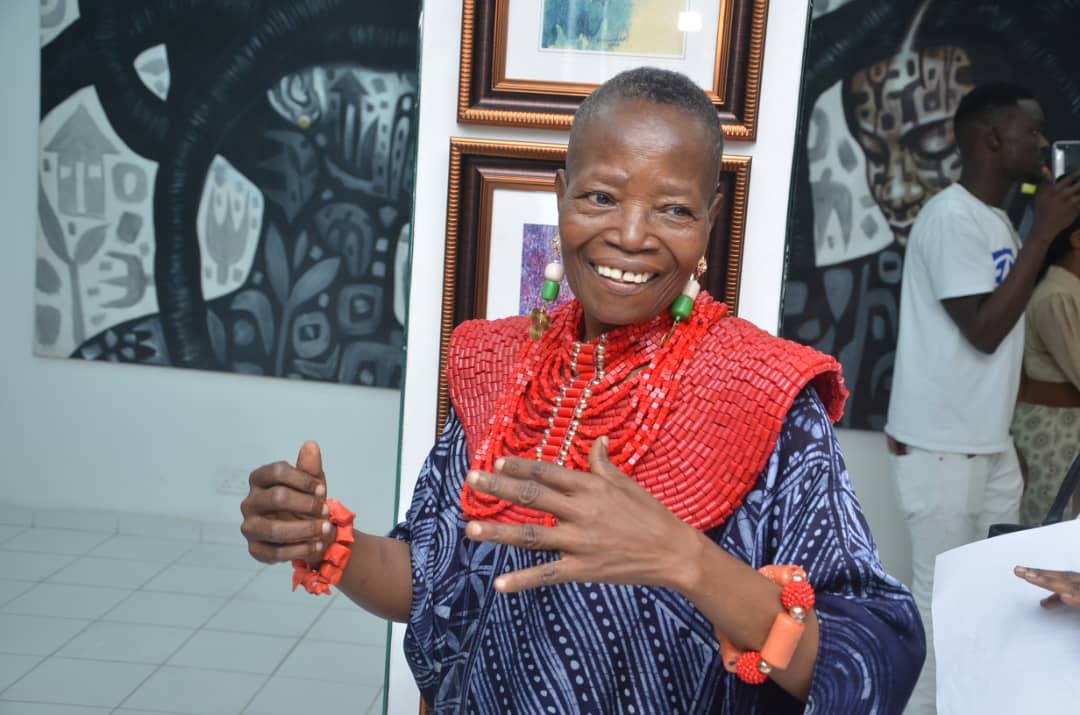
National treasure Chief (Mrs) Nike Okundaye-Davies is one of the Nigerian voices offering a unique perspective to the ravage of Covid-19. The renowned textile artist and Managing Director, Nike Arts Centres and Galleries explains how the novel coronavirus disease has wreaked havoc on the art scene and how aged people, who are most vulnerable to the scythe of the pandemic, have been coping with the pestilence behind closed doors.
Chief Okundaye-Davies, who has travelled round the world showcasing and teaching Nigerian and African arts, in few, well-chosen words captured the trauma of being cooped in the house during the lockdown and the extraordinary care she is taking to ensure she and her husband, age 89, survive the Covid-19 holocaust. Excerpts:
How has Covid-19 affected you and the gallery?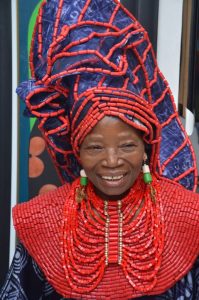
It has been so difficult. After the lockdown, nobody comes around, I mean even after the lockdown. Many of the people who like to come to the gallery to take pictures are afraid to come here now. Besides that, many of the foreign tourists have refused to come here. It’s telling on us; the people who buy arts are mostly foreigners and they are afraid to come out. Previously, you will see about 50 expatriates here in a day; now, not anymore. We thank God, that we fought for life and we are still winning. During this Covid period, no matter the condition you are, you should be grateful to God. During the lockdown, I almost had hypertension. First of all, I was someone who loves seeing people, but I was now locked up in my bedroom and I was working. It just showed the other side, that no matter the condition you find yourself, just be happy, and make use of it. I was doing pen and ink because from morning till evening you just can’t sit down seeing nothing. I was drinking ginger, garlic, and lemon every day, blended together. That is our medicine for Covid-19 and it helped. My husband is 86 and I’m 69 years. That’s what we drink in the morning and evening, on an empty stomach.
Nigeria in its 60th year,what does that mean to you?
I remember I was nine years old in 1960. The only thing I could remember was the rice they gave us in school and the meat. I was so happy I ate rice and that was my first rice ever. I grew up in a small village where there was no rice. All that was there was pounded yam. They never had rice. When children cried was when they would tell them: “I will give you rice, stop crying.” The first rice I would ever eat was during the Independence Day in 1960. I was happy I was able to eat European food.
How do you relax?
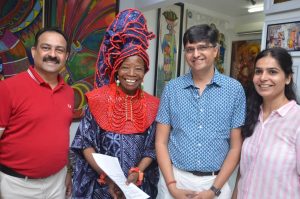 I divide my time into three. One for my family, one for my work and one for my center. My husband is my great supporter. Old age is coming. Sometimes he doesn’t want too much noise; sometimes he feels journalists are asking too much time with his wife. Let her go and cook food for me. I wake up at 5 am to prepare his food. He doesn’t eat outside and doesn’t like to eat food prepared by the maid. Ojo iku lojo isimi (There is rest only in the grave). When I relax, I’m not comfortable. I like to be engaged with something and I hardly get tired, I hardly fall sick, but the day I lie down and I tell myself that, “today, I will not go anywhere,” I will fall sick. When I wake up at 5 am, I do my cooking and get to the gallery at 8 am. I walk round the gallery. Sometimes, I climb the staircase up to four or five times. That’s my own exercise. When visitors come to the gallery, I have to tell them about the works and take them round.
How would you like to be remembered?
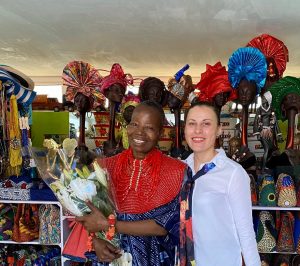
Mama Adire (laughter). I’ll like to be remembered as an artist who promoted the culture of her own people. I like turning trash into treasure. Instead of burning rubber and polluting the air with its smoke, we’ve turned it into something you can put in your garden. These are stones but we have turned them to objects of protection. I want to be remembered as an artist and a mother of artists. My education wasn’t beyond primary school, but I teach PhD holders.